
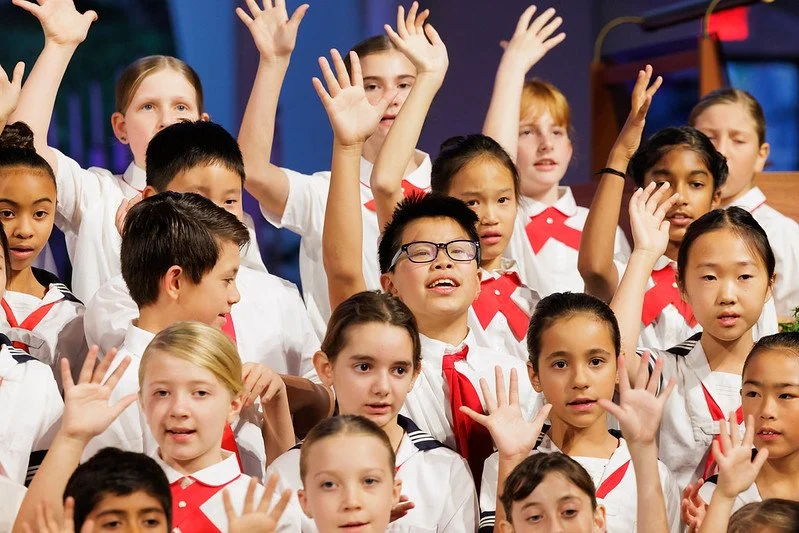
MORE THAN SINGING: 10 WAYS CHOIR HELPS KIDS GROW
A child's love for singing is often what first brings parents to SDCC. But choir isn’t just about singing. It’s a place where children can build confidence, form lasting friendships, and develop a sense of purpose that carries into school and everyday life. They also develop strong musical skills and grow as expressive young artists.
At SDCC, we see this transformation every day. And research backs it up: choral music education supports cognitive development, emotional well-being, and social growth in lasting ways.
Here are 10 research-backed benefits* of participating in choir at a young age:
1. Strengthens Memory and Focus
Choral singing strengthens memory and attention by requiring children to stay mentally engaged and retain information over time. As they learn and perform multiple pieces of music every semester, they memorize lyrics, melodies, and patterns while simultaneously tracking rhythm, pitch, and direction. This kind of sustained, active focus strengthens cognitive skills that research links to improved academic achievement and learning beyond the classroom.
One SDCC parent remarked, “I can see the neurons firing off in his head, as if he’s figuring out a math equation.”
2. Improved Language and Reading Skills
Singing engages the brain’s language-processing systems and helps children hear and distinguish sounds in words (known as phonological awareness) - a critical precursor to reading. Children who participate in making music often demonstrate stronger auditory processing and phonological skills than their peers. Rhythm and singing activities are linked to improved word recognition and reading accuracy. In addition, singing in multiple languages strengthens pronunciation, listening ability, and memory for new sounds, helping children more easily recognize patterns in language and apply those skills to reading and communication.
3. Increased Confidence
Building children’s confidence is a core outcome of participating in SDCC. In season-ending surveys, 80-88% of parents regularly report increased confidence in their children since joining (even for those enrolled in less than one year), and research supports this finding. Repeated practice, collaboration, and artistic exploration helps children believe in what they are capable of. Performing at community-based to high profile events with partners like San Diego Opera and San Diego Symphony provide children opportunities for tremendous growth. Choristers themselves have shared that the growth in their confidence translates outside of choir to school and other activities, particularly when trying new things.
4. Greater Emotional Well-Being
Singing supports emotional well-being by giving children a safe, structured way to express and process their feelings. Through music making and shared learning experiences, children explore a range of emotions - from joy to sadness, positivity to negativity, excitement to trepidation - while building empathy and connection with their fellow singers. Research shows that singing together can increase joy, reduce stress, and help children better understand and regulate their emotions. SDCC choristers have reported a significant increase in overall well-being since joining choir.
5. Stronger Resilience
Setbacks happen. Choir teaches children how to navigate challenging situations, adapt in real time (often while on stage), and recover from mistakes. Choristers regularly encounter and work through mistakes, learning to “think on their feet” and reframe setbacks as part of the learning process - an approach that strengthens coping skills and emotional flexibility. Broader research on music education similarly finds that sustained musical practice fosters perseverance, self-regulation, and the ability to manage stress; these are all key components of resilience.
6. Better Listening & Communication Skills
Choral singing builds strong listening skills by teaching children to be aware of others and respond in real time. SDCC’s artistic team teaches students to “listen louder than they sing” - an approach SDCC alumni often cite as being one of the most important lessons learned in choir. Singers must constantly adjust their pitch, timing, and tone to blend with the group, developing focused, responsive listening. These skills extend beyond music, strengthening communication, collaboration, and attention in everyday life.
7. Builds Teamwork Skills
Choir has been aptly described by SDCC choristers as “a team sport, without the sport.” By its nature, choir teaches children to collaborate, listen, and work together toward a shared goal. Success (for example, singing a difficult piece well or coming back together after losing cohesion) depends on cooperation and shared responsibility, not individual performance. In our 2025 alumni survey, 90% of respondents credit SDCC with improving their teamwork skills.
8. Greater Feelings of Belonging and Social Connection
An innate benefit of choir is the sense of community it fosters amongst choristers, coming together to create something beautiful. SDCC children themselves describe choir as a place where they feel supported, valued, and part of something bigger than themselves. Research has found that when singing in a choir, breathing patterns align causing hearts to “beat as one.” This biological synchronization is believed to support social bonding, helping explain why choral singing is so effective at fostering a sense of unity and collective well-being. One SDCC alumna has shared, “[Choir] trains the mind and the ear to work in concert with others, and the individual to value the sound of many voices above the sound of his or her own.” In our 2025 alumni survey, 88% of respondents credit SDCC for improving their social skills.
9. Builds Discipline and Work Ethic
Choir isn’t always fun. It is hard (but rewarding) work. Learning music techniques, music theory, sight reading, and memorizing music takes time, effort, and practice. It also requires time management and balance with other extracurriculars. One SDCC alum shared, “SDCC taught me how to effectively work in an ensemble and the value of what one can achieve by putting in time, effort, and discipline into practicing with consistency.” SDCC choristers feel a strong sense of obligation to be prepared and recognize that their individual effort directly impacts the group’s success - reinforcing personal responsibility and work ethic. Structured musical training requires regular practice, focused effort, and delayed gratification. These skills contribute to improved executive functioning and self-discipline.
10. Broadens Perspectives and Creativity
Choir broadens perspectives and sparks creativity by exposing children to music from diverse cultures and traditions, geographies, languages, musical styles, and time periods. As they explore different styles and connections to the human story, children develop cultural awareness, empathy, and the ability to think creatively. This experience helps them better understand the world around them while expressing their own ideas in new and meaningful ways. SDCC also helps children explore the world beyond their own through touring opportunities.
Choral music education offers lasting benefits far beyond the rehearsal room. It sets children up so they can thrive in all aspects of life. While not all SDCC choristers pursue music after high school, they carry with them a lifelong appreciation for the arts, becoming audience members, supporters of the arts and advocates for arts education. They are also equipped with skills to grow into future leaders and to continue making music and turning to it for comfort throughout their lives.
If you’re looking for an activity where your child can grow in confidence, build friendships, and thrive, we invite your family to learn more about our choir program and audition process.
JOIN US THIS FALL - REGISTRATION OPENS JULY 1 - REHEARSALS BEGIN LATE AUGUST
Join our mailing list to be notified when Fall 2026 registration opens on July 1.
For students in grades 4–12:
Schedule a free, informal, Zoom audition, a fun and low-pressure way to meet one of our artistic team and explore the program. No preparation is required.
For students in grades 1–3:
No audition is necessary. Enrollment opens July 1. Visit our Program Overview to learn more.
Want to see the program in action?
Attend an upcoming performance and experience what children can accomplish through choral music.
Questions? Contact us at sdcc@sdcchoir.org.
*Research sources:
Chorus America. (2009). How Children, Adults, and Communities Benefit from Choruses: The Chorus Impact Study. Chorus America.
Dumont, E. et al. (2017). Music Interventions and Child Development: A Critical Review and Further Directions. Frontiers in Psychology.
Grunwald Associates LLC & Chorus America. (2019). The Chorus Impact Study: Singing for a Lifetime. Chorus America.
San Diego Children’s Choir. (2018). Project Impact Study. Gumpert Foundation.
Selmani, T. A. (2024). The Influence of Music on the Development of a Child. Journal of Effective Teaching Methods.
Vickhoff, B. et al. (2013). Music Structure Determines Heart Rate Variability of Singers. Frontiers in Psychology.